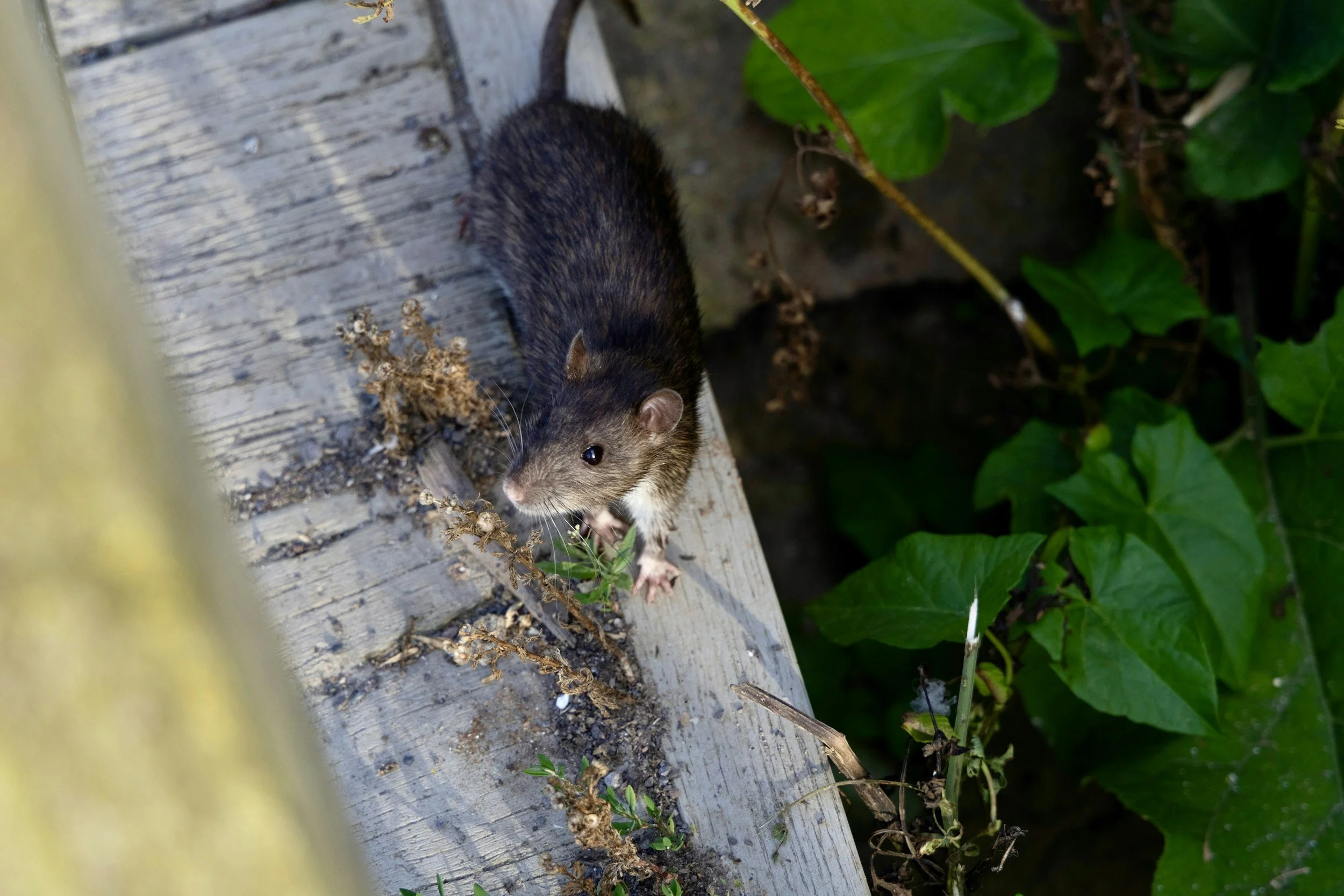
🐀Rat Facts
Rats can squeeze through openings about the size of a quarter.
Their teeth never stop growing, causing them to constantly gnaw.
Rats are excellent climbers and swimmers.
A single pair of rats can produce dozens of offspring in one year.
Rats are primarily active at night.
They often contaminate insulation and stored items with droppings and urine.
Rat Control
Signs of a Rat Problem
Scratching noises in walls, ceilings, or attics
Droppings around food sources or storage areas
Gnaw marks on wood, wiring, or pipes
Greasy rub marks along walls
Burrows around foundations or landscaping
Strong ammonia-like odors
Why Rats Invade Homes
Rats enter homes searching for food, water, and shelter. Even small openings around foundations, utility lines, rooflines, and garages can provide easy access to your home.
Our Humane Removal Process
Thorough property inspection
Identify rat activity and nesting areas
Remove active infestations
Locate all entry points
Develop a customized treatment plan
Recommend long-term prevention
Exclusion Services
After removal, we help keep rats out by:
Sealing entry points
Installing rodent-proof barriers
Repairing damaged vents and openings
Identifying conditions that attract rodents
Preventing Future Problems
Seal food sources
Secure trash containers
Remove clutter around your home
Trim vegetation away from structures
Schedule regular inspections
Frequently Asked Questions
Are rats dangerous?
Yes. Rats can spread diseases, contaminate food, and damage wiring, insulation, and building materials.
Can rats chew through walls?
Rats can chew through wood, drywall, plastic, and even softer metals to gain access to your home.
How do rats get inside?
They can enter through surprisingly small openings around foundations, roofs, crawlspaces, garages, and utility penetrations.
Our Approach
Thorough property inspection
Identify rat activity and nesting areas
Remove active infestations
Locate and seal entry points
Install rodent-proof exclusion materials
Repair wildlife damage when needed
Sanitize affected areas if necessary
Help prevent future rodent infestations