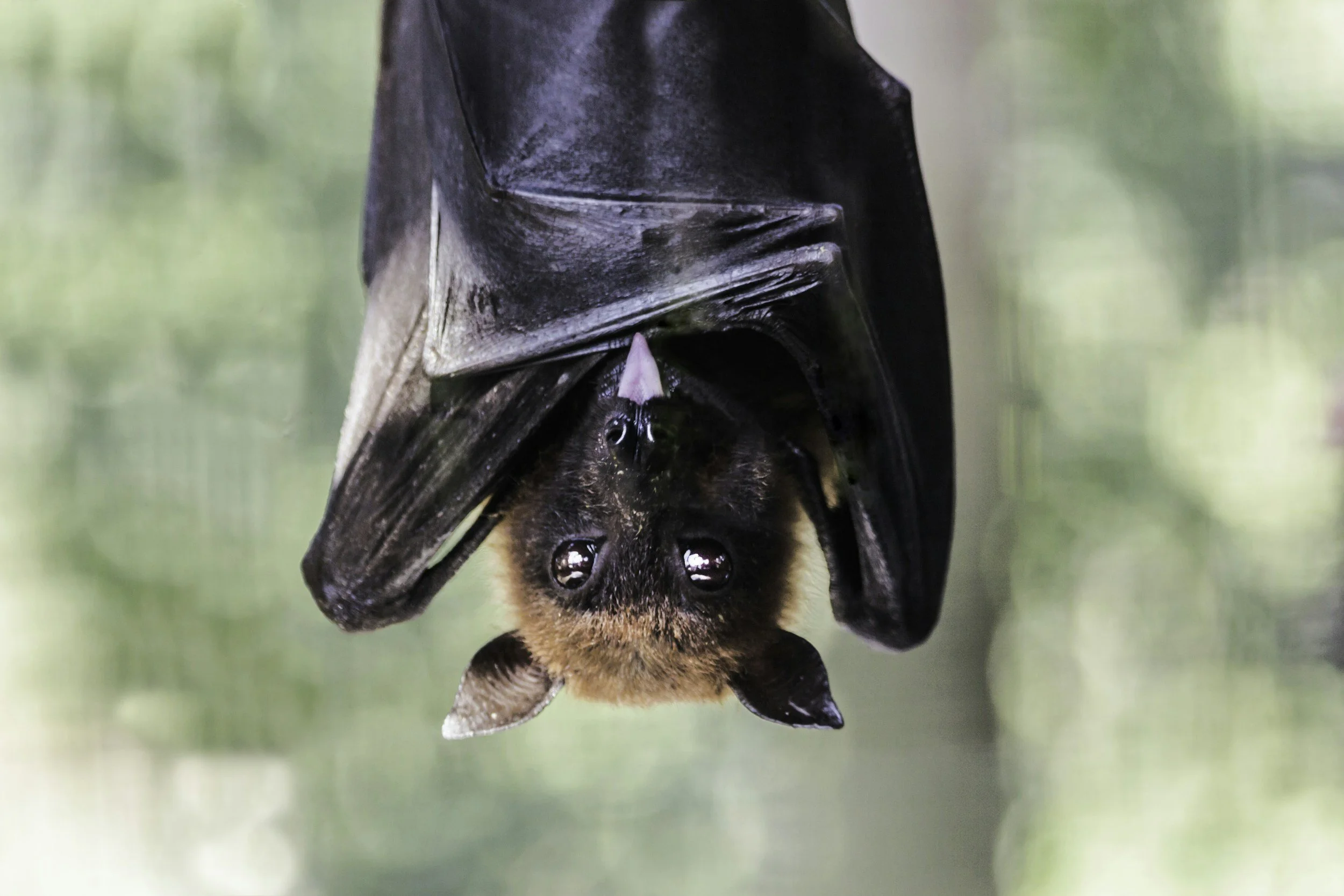
🦇 Bat Facts
Bats are the only mammals capable of sustained flight.
A single bat can eat hundreds to thousands of insects in one night.
Most bats found in North Carolina are beneficial insect eaters.
Bats often return to the same roost year after year if entry points remain open.
They can fit through openings as small as ⅜ of an inch.
Bat guano can accumulate quickly and damage insulation over time.
Bat exclusions are typically not performed during the June–August maternity season.
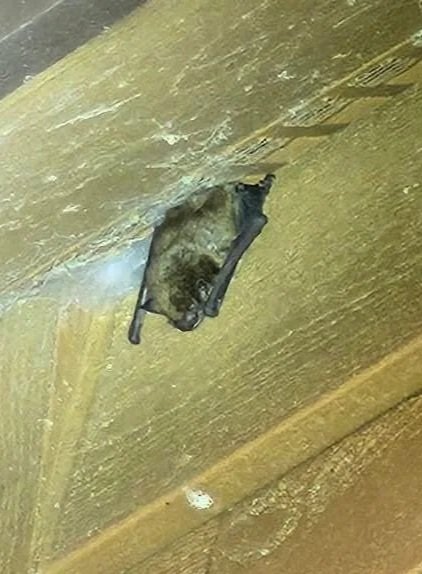
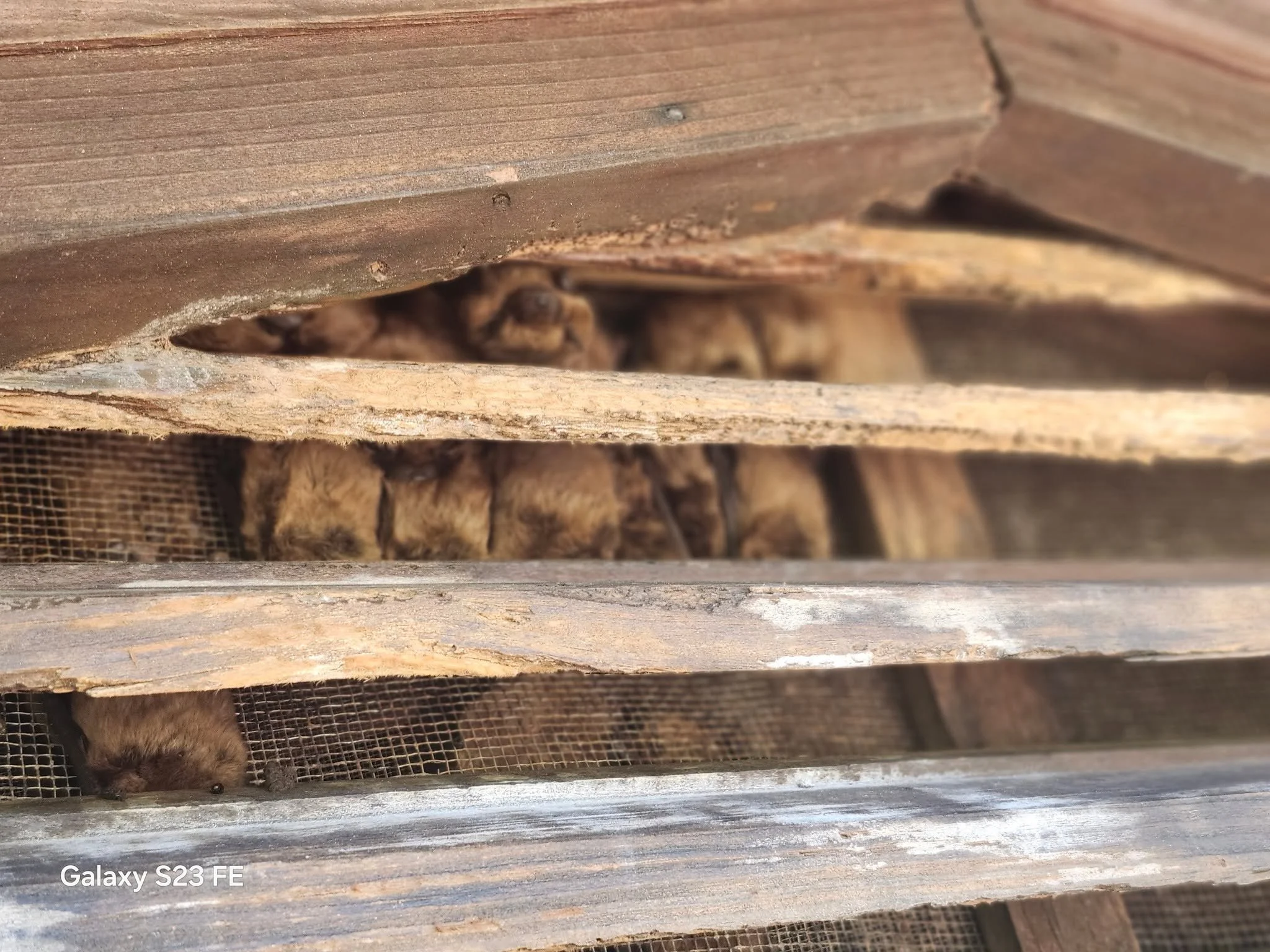
Bat Removal
Signs of a Bat Problem
Bats flying around your home at dusk
Chirping or scratching noises in the attic or walls
Small droppings (guano) below entry points
Dark staining around roof gaps or vents
Strong ammonia-like odors
Why Bats Choose Your Home
Bats seek warm, protected spaces to roost and raise their young. Attics, gable vents, rooflines, soffits, chimneys, and small gaps in a home's exterior provide ideal shelter from predators and weather.
Bat Inspection
Our technicians perform a thorough inspection to:
Identify active bat entry points
Locate roosting areas
Assess the size of the colony
Check for guano accumulation
Develop a customized exclusion plan
Humane Bat Exclusion
Because bats are protected wildlife, they are removed through exclusion—not trapping. We install one-way exclusion devices that allow bats to leave safely while preventing them from re-entering your home.
Guano Cleanup & Sanitation
After the bats have been excluded, we can:
Remove accumulated guano
Sanitize contaminated areas
Eliminate odors
Replace damaged insulation if necessary
Bat Maternity & Blackout Season
In North Carolina, bat exclusions are typically not performed from June through August because this is the maternity season, also known as the bat blackout period. During this time, flightless baby bats depend entirely on their mothers. Excluding adult bats too early can leave pups trapped inside, creating both humane and wildlife concerns.
If you discover bats during the blackout period, Wildlife Home Solutions can still:
Perform a thorough inspection
Identify entry points and areas of activity
Develop a customized exclusion plan
Schedule exclusion services as soon as regulations and conditions allow
Offer temporary recommendations to help minimize bat activity until exclusion can be completed
Exclusion & Repairs
Once all bats have safely exited, we permanently protect your home by:
Sealing entry points
Repairing damaged soffits and roof gaps
Installing wildlife-proof barriers
Helping prevent future infestations
Frequently Asked Questions
Why can't bats be trapped?
Bats are protected in many situations, and exclusion is the safest, most effective, and humane removal method.
Will bats come back?
Without professional exclusion, bats often return to the same roost year after year.
Are bats dangerous?
While bats are beneficial to the environment, they should never be handled because they can carry diseases, including rabies.
What is bat guano?
Guano is bat droppings. Over time it can create odors, contaminate insulation, and pose health risks if left untreated.
Our Approach
Complete bat inspection
Identify all bat entry points
Humane bat exclusion
Install one-way exit devices
Seal entry points after exclusion
Remove guano when needed
Sanitize affected areas
Help prevent future bat colonies